
 Explore
The first woman to cast a ballot for a candidate in the United States, the inventor of the Lear Jet, the first African American to medal in the Olympics, a man who forever changed the way defendants are represented in court – these are just a few examples of Hannibal residents who left a legacy that is still evident today.
Hannibal has been home to many inventors, trailblazers, heroes, and visionaries since its early days. The stories of these individuals continue to resonate today, with museums, murals, and other landmarks throughout town recognizing their achievements. Come learn more about how they changed the world, and be prepared for the opportunity to Write Your Own Story! (An asterisk denotes the presence of a site related to the Hannibal resident).
Morris Anderson*
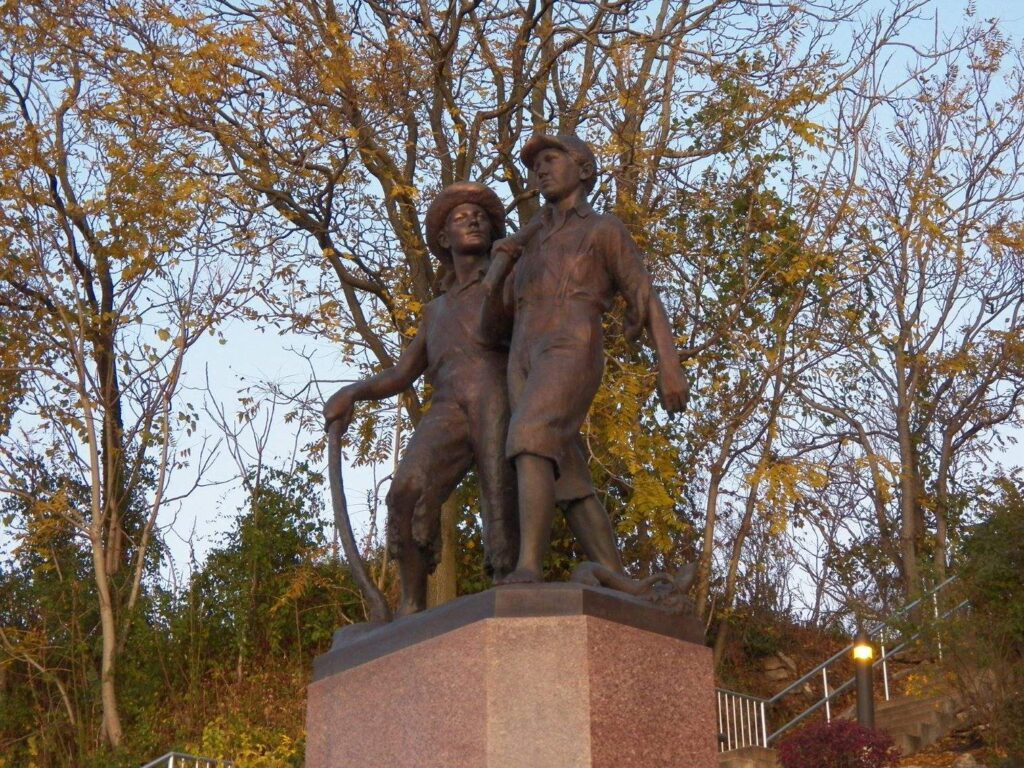
(March 22, 1879 – November 10, 1945) Morris Anderson was a prominent Hannibal attorney and civic leader. He presided over the dedication of the Tom and Huck statue in 1926. Anderson traveled nationwide with Chautauqua companies, lyceum courses, and attended many civic gatherings. In October 1924, the issue of The Billboard, a nationally known publication, said Anderson was the top Chautauqua speaker. He is buried in Riverside Cemetery.
Jake Beckley*
(August 4, 1867 – June 25, 1918) Jake Beckley, known as “Old Eagle Eye”, was a hard-hitting first baseman. He joined the Pittsburgh Alleghenies (later the Pirates) in 1888 and also played with the Giants, Reds, and Cardinals before retiring in 1907. Beckley was inducted into the National Baseball Hall of Fame in 1971. He was born in Hannibal and is buried in Riverside Cemetery. There is a mural of Beckley in the 100 block of Center Street.

James Carroll Beckwith
(September 23, 1852 – October 24, 1917) James Carroll Beckwith, who preferred to be called Carroll, was born in Hannibal. He was an American landscape, portrait, and genre painter whose Naturalist style led to his recognition in the late nineteenth and very early twentieth century as a respected figure in American art. Beckwith is buried in Westchester County, N.Y.
Margaret Tobin Brown*
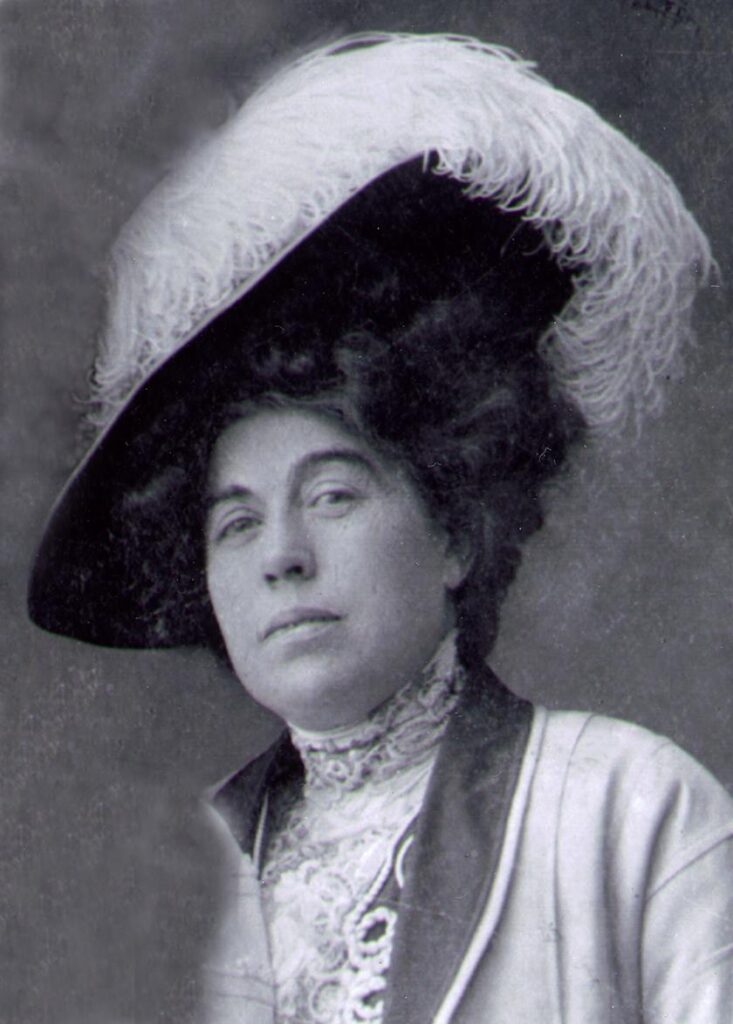
(July 18, 1867 – October 26, 1932). Margaret Tobin Brown was born in Hannibal. She was posthumously known as “The Unsinkable Molly Brown”, and was an American socialite and philanthropist. She unsuccessfully encouraged the crew in Lifeboat No. 6 to return to the debris field of the 1912 sinking of RMS Titanic to look for survivors.
During her lifetime, her friends called her “Maggie”, but even by her death, obituaries referred to her as the “Unsinkable Molly Brown”. The reference was further reinforced by a 1960 Broadway musical based on her life and its 1964 film adaptation, which were both entitled “The Unsinkable Molly Brown”. She is buried in Westbury, N.Y. The Molly Brown Birthplace and Museum is run by the Hannibal Convention & Visitors Bureau.
Blanche Kelso Bruce
(March 1, 1841 – March 17, 1898) Blanche Kelso Bruce was born into slavery in Virginia. He was freed and educated. In 1864, he moved to Hannibal and established a school for black children. Bruce later became the second African American to become a U.S. Senator, representing Mississippi from 1875-1881. He is buried in Washington D.C.
Marie Louise Byrum (nee Rouff)*
(September 30, 1893 – January 1967) Following the 19th Amendment, Marie Louise Byrum cast the first vote by a woman in an election for a candidate in the United States during a special election in Hannibal on August 31, 1920. She and her husband later retired to Florida, but she was buried in Mount Olivet Cemetery in Hannibal. There is a mural of her in the 100 block of Center Street.

Samuel Langhorne Clemens*
(November 30, 1835 – April 21, 1910) Clemens was born in Florida, Missouri in 1835. The family moved to Hannibal in 1839. Clemens left in 1853 and became famous as Mark Twain. His Boyhood Home is a museum in Hannibal. He is buried in Elmira, N.Y.
Admiral Robert E. Coontz*
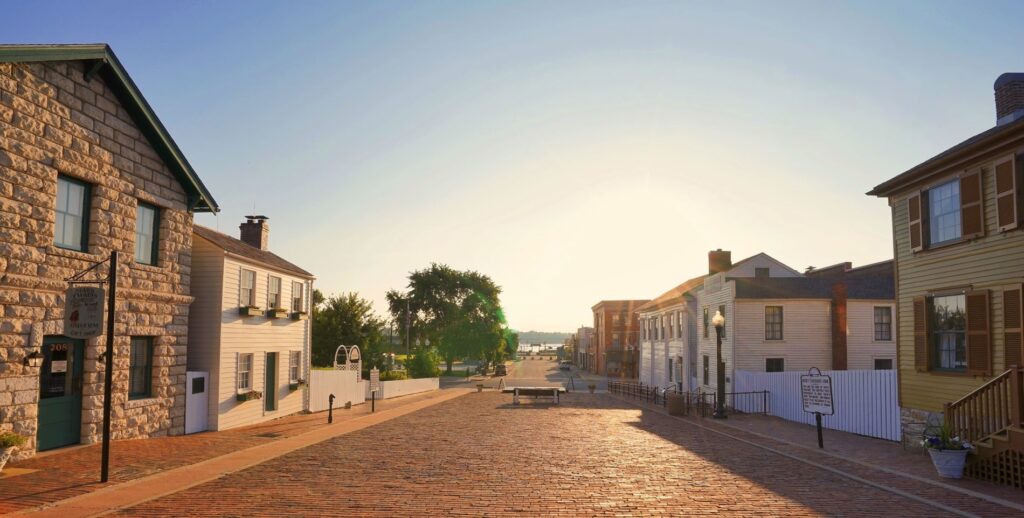
(June 11, 1864 – January 26, 1935) Robert Coontz was born in Hannibal. He asked family friend Congressman William H. Hatch to recommend his appointment to the Naval Academy. Coontz graduated in 1885 and began his naval career. He served as the Governor of Guam from January 1912 to September 1913. Coontz served as the Commander of the United States Fleet from 1925 until his retirement in 1928.
Coontz authored two books about his naval career, “From the Mississippi to the Sea” and “True Anecdotes of an Admiral”. The former Hannibal Armory, a WPA project, was named for him. The building now serves as the Hannibal recreation center. ADM Coontz is buried in Mount Olivet Cemetery in Hannibal. There is a mural of him in the 100 Block of Center Street.

Helen Cornelius
(December 6, 1941 -) Helen Cornelius is a country singing star who was born in Hannibal and grew up nearby.
George L. Crosby*
(1833 – 1877) George Crosby was a photographer/artist who has paintings in the Mark Twain Museum. He lived in Hannibal in the 1870s. Crosby and his family died in a flood in 1877 and he is buried in Riverside Cemetery.
Arvids Danielson*
(1902 – 1979) Arvids Danielson was a Hannibal artist whose artwork is seen in many homes and public buildings. He was a commercial artist until retirement and then he was devoted to painting and teaching. Danielson lived in Hannibal from 1955 until his death. He is buried in the Riverside Cemetery.
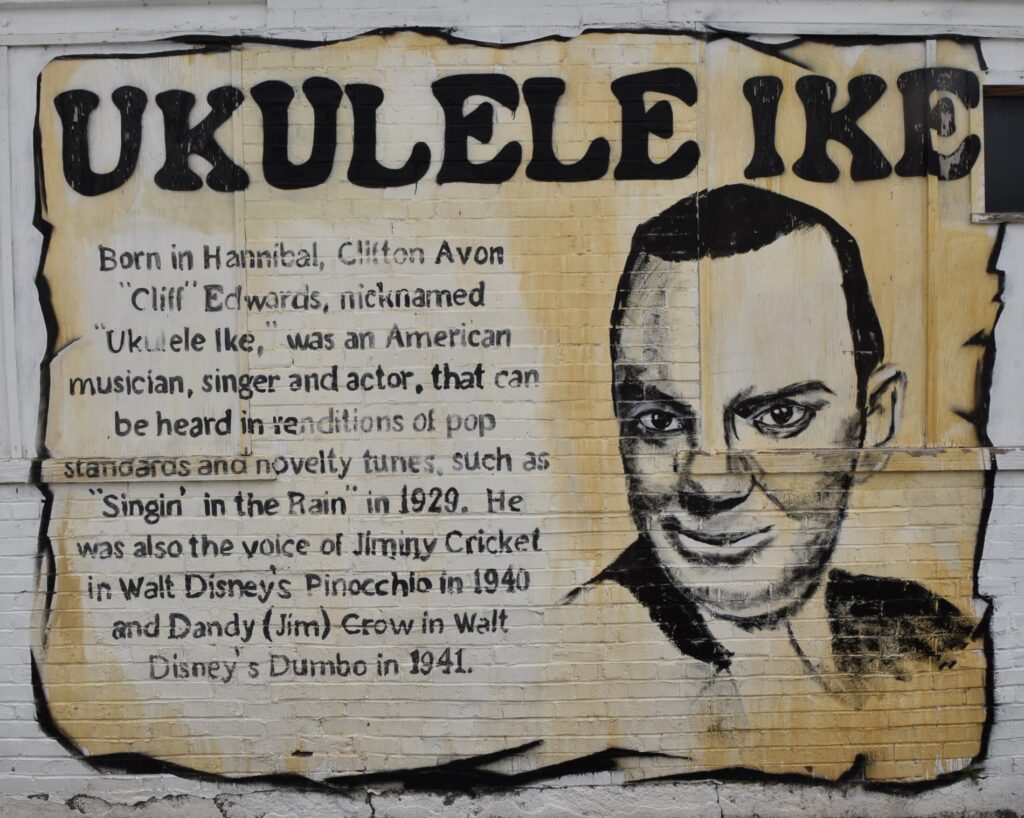
Clifton Avon “Cliff” Edwards*
(June 14, 1895 – July 17, 1971) Clifton Edwards was born in Hannibal. Later nicknamed “Ukulele Ike”, he became an American musician, singer and actor, who enjoyed considerable popularity in the 1920s and early 1930s, specializing in jazzy renditions of pop standards and novelty tunes. He had a number-one hit with “Singin’ in the Rain” in 1929. Edwards also did voices for animated cartoons later in his career, and he is best known as the voice of Jiminy Cricket in Pinocchio and Dandy (Jim) Crow in Dumbo. Edwards is buried in North Hollywood, Calif. There is a mural of him in the 100 block of Center Street.
Arthur Lawrence “Jack” Fascinato
(September 11, 1915 – December 24, 1994) Arthur Fascinato was a composer, small orchestra leader, arranger, and pianist best known for his work in early television. In that capacity, Fascinato scored or arranged several animated or film inserts for Sesame Street. Fascinato was also the Hannibal school orchestra director in the 1930s. He is buried in Cathedral City, Calif.
Arthur J. Forrest*
(1896 – November 30, 1964) Arthur Forrest was from Hannibal. During the Battle of the Argonne in France in September 1918, his platoon was pinned down by a German machine gun nest. Forrest moved forward and single-handedly held the Germans at bay until reinforcements advanced. He was credited with capturing 6 machine guns and 83 enemy soldiers. SGT Forrest received the Medal of Honor for this act. He is buried in Grandview Memorial Cemetery.
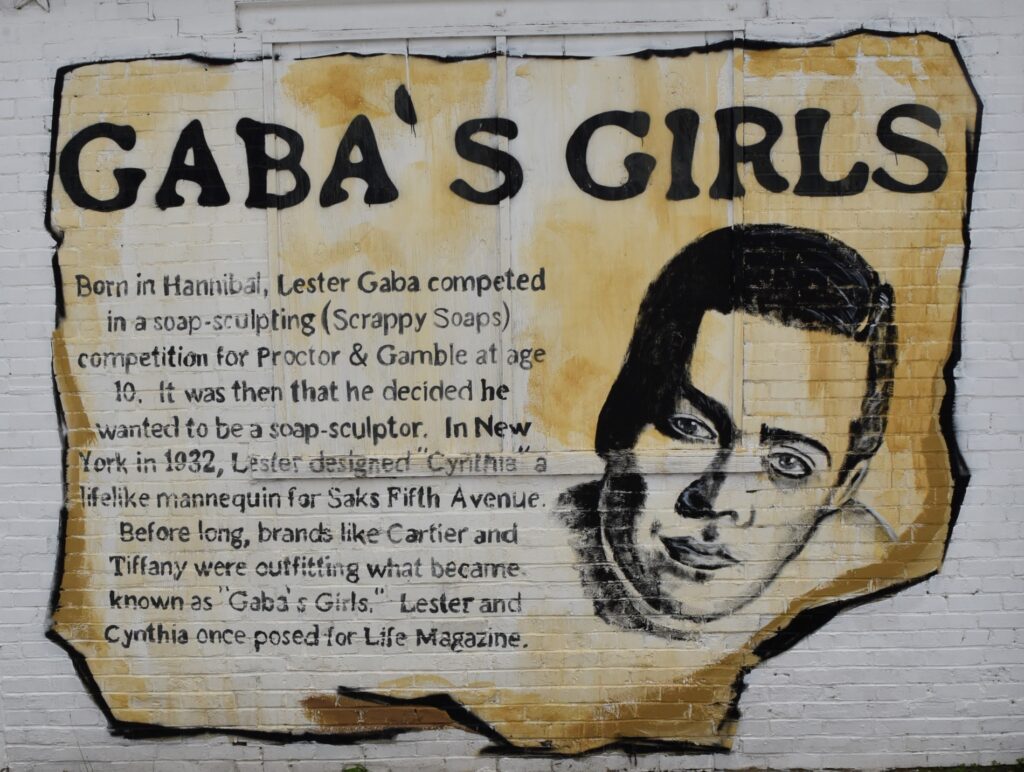
Lester Gaba*
(June 24, 1907 – August 12, 1987) Lester Gaba was an American sculptor, writer, and retail display designer. He was born in Hannibal. He is buried in Bnai Sholem Cemetery in Hannibal. There is a mural of him in the 100 block of Center Street.
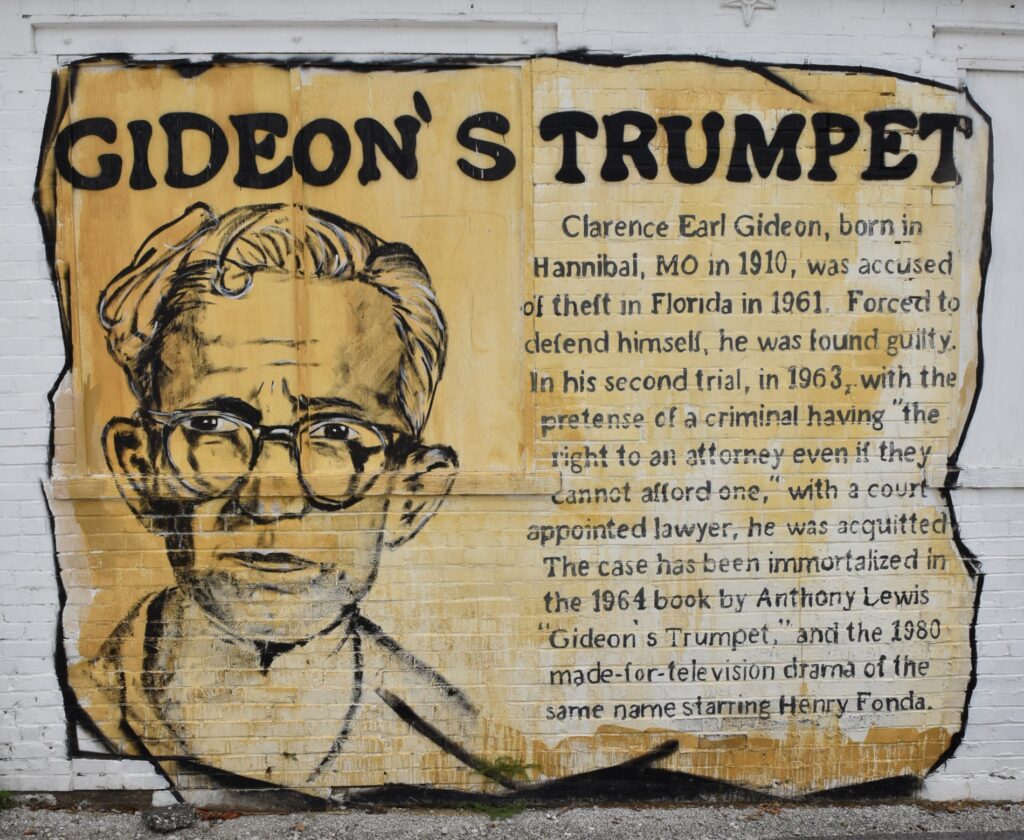
Clarence Gideon*
(August 30, 1910 – January 18, 1972) Clarence Gideon was born in Hannibal. He became a poor drifter accused in a Florida state court of felony theft. His case resulted in the landmark 1963 U.S. Supreme Court decision Gideon v. Wainwright, holding that a criminal defendant who cannot afford to hire a lawyer must be provided one at no cost.
At Gideon’s first trial in August 1961, he was denied legal counsel and was forced to represent himself, and was convicted. After the Supreme Court ruled in Gideon that the state had to provide defense counsel in criminal cases at no cost to the indigent, Florida retried Gideon. At his second trial, which took place in August 1963, he appeared with a court-appointed lawyer representing him and bringing out for the jury the weaknesses in the prosecution’s case. Gideon was acquitted. Gideon is buried in Mount Olivet Cemetery in Hannibal. There is a mural of him in the 100 block of Center Street.
Mary Louise Gillett*
(October 3, 1847 – December 11, 1877) Mary Gillett was a Hannibal native, and the first woman to receive a degree at the University of Missouri in 1870. A women’s dormitory was named in her honor in 1967. Gillett is buried in Riverside Cemetery.
Roy Hamlin*
(October 6, 1890 – October 12, 1960) Roy Hamlin was a Hannibal lawyer and later Missouri legislator/Speaker of the Missouri House of Representatives for four terms. Hamlin is buried in Grand View Burial Park.
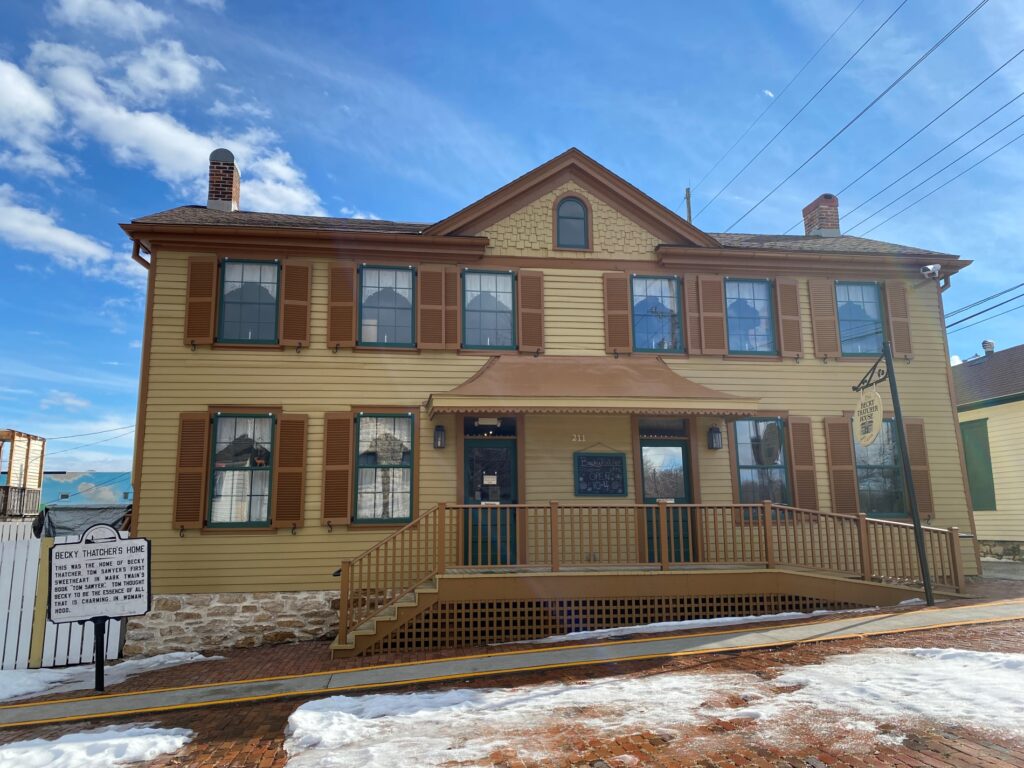
Laura Hawkins Frazer*
(December 1, 1838 – December 26, 1928) Born in Georgetown, Kentucky, Laura Hawkins was only a few years old when her family moved to Hannibal, Missouri, where they lived in a two-story frame house on Hill Street, across from the Clemens’ Family. She was a childhood friend and sweetheart of Sam Clemens. Laura Hawkins attended Van Rensselaer Presbyterian Academy in Rensselaer, Missouri, and in 1858 married James W. Frazer (1833–75), a physician, with whom she had two sons.
In 1895 she became the matron of a Hannibal home for orphans and the indigent. Frazer was the inspiration for Becky Thatcher in Tom Sawyer and Huckleberry Finn and Twain used her name for one of the principal characters in The Gilded Age. The house she lived in later in life has been restored and may be open for tours in the future. Frazer is buried in Big Creek Cemetery in Rensselaer, about 15 miles west of Hannibal.
William Henry Hatch*
(September 11, 1853 – December 23, 1896) William Hatch was born in Hannibal. He served six terms in the U.S. House of Representatives. A friend of agriculture, he passed 50 laws to help farmers including developing the post of Secretary of Agriculture on the President’s cabinet; forming the Bureau of Animal Industry; and the Hatch Act, which established experimental stations to improve plant and animal production. Hatch Residence Hall at the University of Missouri is named for him. A statue of Hatch is in Central Park. Hatch is buried in Mount Olivet Cemetery.

Dr. Florence Helm*
(December 31, 1886 – April 22, 1980) Dr. Helm served on the advisory staff of the United States Treasury Department during the presidency of Franklin D. Roosevelt. She was a native of Hannibal and a descendant of Judge John B. Helm, a prominent Hannibal pioneer. Dr. Helm is buried in Mount Olivet Cemetery.
Thomas J. Higgins*
(June 8, 1831 – August 15, 1917) Thomas Higgins joined the 99th Illinois Regiment during the Civil War. At Vicksburg, his regiment stormed a Confederate position. As an unarmed flag bearer, Higgins ran forward until he was the only man in his regiment left. He was captured. The Confederate commander was so impressed with his bravery that he nominated him for the Medal of Honor even though he was the enemy. Higgins received the medal on April 1, 1898. SGT Higgins is buried at Holy Family Cemetery.
Jack B. Kubisch
(November 5, 1921 – May 7, 2007) Jack Kubisch was born in Hannibal. After World War II, he joined the Department of State, then spent 11 years in private industry. President Nixon named him Asst. Secretary of State for Inter-American Affairs and later President Ford named him as United States Ambassador to Greece. Kubisch died at home in Southern Pines, N.C.
Henry LaCossitt*
(August 6, 1901 – December 2, 1962) Henry LaCossitt was a Journalist/Editor of Collier’s Magazine. Born in Shreveport, he spent his boyhood in Hannibal. He is buried in Mount Olivet Cemetery.
William P. Lear*
(June 26, 1902 – May 14, 1978) William Lear was born in Hannibal. He was the inventor of the first automobile radio, the first automatic pilot for airplanes, and the inventor/producer of the Lear Jet. Lear was buried at sea. There is a mural of him in the 100 block of Center Street.
Donald M. Nelson
(November 11, 1888 – September 29, 1959) Donald Nelson was born in Hannibal. He graduated from the University of Missouri in 1911 with a degree in chemical engineering. In 1912, he took a job as a chemist with Sears, Roebuck, and Company. There he steadily advanced, becoming vice president in 1930 and being named executive vice president and vice chairman of the executive committee. Nelson later became the Director of Priorities of the United States Office of Production Management (1941–1942), and chairman of the War Production Board (1942–1944). He then served for two years (1945–1947) as president of the Society of Independent Motion Picture Producers. Nelson is buried in Los Angeles, Calif.
George Coleman Poage
(November 6, 1880 – April 11, 1962) George Poage was born in Hannibal. His family moved to Wisconsin, and he attended the University of Wisconsin, excelling in athletics. At the 1904 Olympic Games in St. Louis, he became the first African American to medal in the Olympics, taking bronze in both the 220-yard and 440-yard hurdles. Poage worked for nearly 30 years as a postal clerk in Chicago. He is buried in Blue Island, Ill.

Ron Powers
(November 18, 1941 – ) Ron Powers was born in Hannibal and had a journalistic career. He received a Pulitzer Prize while writing for the Chicago Sun Tribune. He has written several acclaimed books on Hannibal and Mark Twain. He helped write “Flags of Our Fathers”, about the flag raising on Iwo Jima, which became a Steven Spielberg film. Powers has collaborated on several autobiographies of noted Americans.
John Rogers
(October 30, 1829 – July 26, 1904) John Rogers was a sculptor who made his first sculptured genre groupings in Hannibal in the 1850s using clay from Lover’s Leap. His studio is now a museum in New Canaan, Mass. Rogers is buried in Salem, Mass.
Dr. Margaret Catherine Steinmeyer Schmidt*
(aka Margaret Ruck de Schell Schmidt 1830-1909) Margaret Steinmeyer was born in Germany. She immigrated to America and later married clergyman Carl Schmidt. In order to accompany him on his missionary work, she needed to be qualified in some field, so she went to school and completed training at the Missouri Medical College in St. Louis. Dr. Schmidt became the first licensed woman doctor in Missouri. They moved to Hannibal in the 1860s and she practiced medicine in Hannibal for almost 40 years. Dr. Schmidt is buried in Riverside Cemetery.
Larry Dean Thompson
(November 15, 1945 – ) Larry Thompson was born in Hannibal. After receiving a law degree from the University of Michigan, he served as U.S. Attorney for the Northern District of Georgia. In 2001, President Bush named him Deputy Attorney General for the United States, a position he held through the 9-11 attack. Leaving government service, Thompson entered private business.
Florence Thorne
(July 28, 1877 – March 16, 1973) Florence Thorne was born in Hannibal. She attended Oberlin College from 1896-1899 and received a Bachelor of Philosophy from the University of Chicago in 1909. Thorne taught in Hannibal for 10 years and then became the Executive Assistant to Samuel Gompers in the early days of the American Federation of Labor. She edited the American Federalist and later wrote a biography of Gompers. Thorne is buried in Washington D.C.
Egbert Anson Van Alstyne
(March 4, 1878 – July 9, 1951) Egbert Van Alstyne was the composer of “In the Shade of the Old Apple Tree” and other well-known songs of the World War I era. He attended Hannibal schools and lived in Saverton, a small community south of Hannibal. Van Alstyne is Buried in Evanston, Ill.
Special thanks to the Mark Twain Boyhood Home and Museum for this information.

